Thinking about buying a home on acreage around Wall? The house matters, but the land can make or break the purchase. If you want room for animals, a garden, extra privacy, or simply more space to spread out, you need to know what you are really buying before closing. This guide walks you through the biggest due-diligence items for acreage property in Wall and Tom Green County so you can move forward with more confidence. Let’s dive in.
Start With the Land, Not Just the House
When you buy acreage, you are not just buying square footage and finishes. You are also buying access, utilities, drainage, boundaries, and long-term maintenance responsibilities.
In Tom Green County, local permitting and environmental review processes make it clear that site conditions matter. The county reviews lot size and location for septic and floodplain issues, and county forms ask about acreage, survey information, subdivision status, and water source. That is a good reminder that rural property needs a different checklist than a typical in-town home.
Check Legal Access First
One of the first questions with acreage is simple: can you legally and practically get to the property? A beautiful home loses value fast if access is unclear, shared, or hard to use.
Tom Green County has a driveway access and road-cut permit process, which shows how important road access is in this market. If a tract is outside a subdivision, county forms may also ask for acreage and survey details, which reinforces the need to verify access and boundaries early.
Ask Who Maintains the Road
If the property sits on a private road or in a rural subdivision, ask who is responsible for maintenance. Tom Green County subdivision regulations state that subdivision roads are not automatically accepted for county maintenance unless the county separately accepts them.
That means property owners may be responsible for upkeep. It is also smart to ask how police, fire, and EMS reach the property, since county rules note that private-road subdivisions must disclose that road conditions can affect emergency access.
Look Closely at Easements and Shared Drives
A long driveway or a shared entrance can seem harmless until questions come up about use, maintenance, or ownership. If the property has an easement, an unusual shape, or a shared driveway, bring in a surveyor and title professional early.
Texas A&M AgriLife resources for rural landowners highlight common issues like easements, landlocked property, trespassing, fence law, and adverse possession. On acreage, these are not minor details. They are part of the real value and usability of the land.
Verify Boundaries With a Survey
Fence lines do not always match legal boundaries. That is why a current survey matters, especially if the tract has older fencing, odd corners, or multiple access points.
A survey can help you confirm acreage, identify easements, and see whether improvements appear to sit where they should. If the seller cannot provide a recent survey, that is not always a deal breaker, but it does mean you should take extra care before closing.
Understand Water Sources and Well Responsibility
Many homes on acreage around Wall rely on private wells. If that is the case, you should expect to verify both the water source and the condition of the system.
Texas A&M AgriLife notes that private well owners are responsible for checking and maintaining water quality. For buyers, that makes well records important. Ask for water-quality test results, pump service history, and any paperwork showing routine maintenance.
Ask About Old or Unused Wells
An old well on the property is not something to ignore. AgriLife says a well unused for six consecutive months can be considered abandoned, and Texas law makes the landowner responsible for plugging abandoned wells.
If a property has an unused well, ask for records and get professional guidance. This is the kind of issue that is much easier to sort out before closing than after.
Do Not Assume Septic Is Simple
Acreage buyers sometimes assume that more land means fewer septic concerns. In reality, septic review is one of the most important parts of rural due diligence.
The Texas Commission on Environmental Quality requires a site evaluation by a licensed site evaluator or professional engineer before an on-site sewage facility is built or altered, and permits are generally required. Tom Green County Environmental Health also enforces OSSF rules, reviews lot size and location for septic and floodplain issues, and regulates development in mapped floodplains.
The 10-Acre Rule Has Limits
Some buyers hear about a 10-acre septic rule and assume it creates an automatic exemption. TCEQ guidance makes clear that the rule is narrow and still depends on site evaluation and other conditions.
In other words, do not make assumptions based on acreage alone. County confirmation matters, and local site conditions can change what is allowed.
Ask for Septic Records
If the property already has a septic system, ask for permits, maintenance records, and pumping history. TCEQ says conventional anaerobic systems generally need the tank pumped every three to five years, while aerobic systems may have stricter maintenance requirements.
If the system is old, undocumented, or appears modified, it is worth bringing in a septic professional. A standard home inspection is helpful, but it should not be your only source of information on a rural system.
Review Floodplain and Drainage Early
Not every acreage property has a floodplain issue, but you should verify it early. Tom Green County’s Environmental Health office specifically reviews septic and floodplain issues, and the county participates in the National Flood Insurance Program.
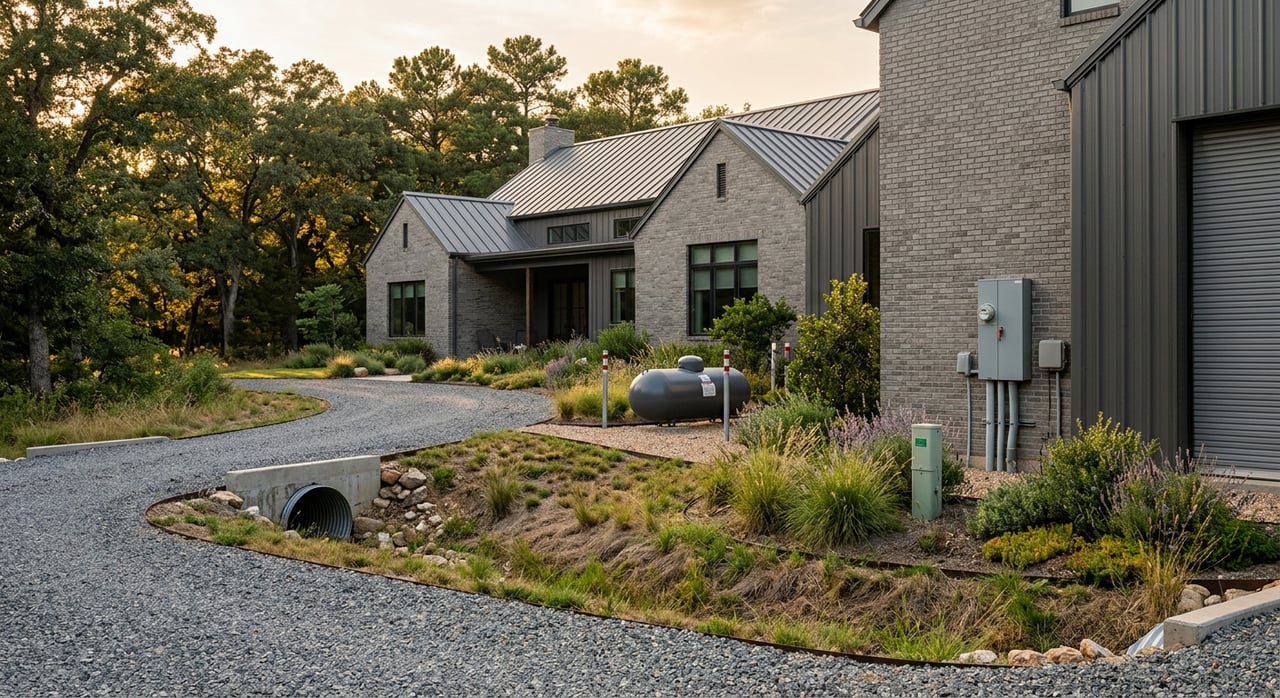
Drainage also matters beyond flood maps. Low spots, runoff patterns, and standing water can affect where you build, how you use the land, and how well your septic system functions. This is one of those items that deserves attention before you fall in love with the view.
Match the Property to Your Intended Use
Acreage can mean many things. You might want a few animals, a big shop, a large garden, or simply room to breathe. The right property for one goal may not be the right property for another.
That is why your due diligence should start with how you plan to use the land. Then you can work backward to confirm whether the property supports that use.
Fencing and Livestock Use
If you want livestock, even on a small scale, check the fencing against a survey and inspect gates, water access, and overall condition. AgriLife resources for rural landowners cover fence law, livestock issues, and open and closed range topics, which shows how important these practical details can be.
Do not assume existing fencing is accurate or adequate. What works for appearance may not work for actual animal use or boundary certainty.
Pasture and Grazing Reality
Before you count on a tract to support goats, cattle, or other animals, get local guidance. Tom Green County Ag & Natural Resources resources point landowners to information on drought feeding management, rangeland drought management, stocking rates, grazing management, and forage planning.
That matters because carrying capacity is not just about acreage. It is also about forage, water, weather, and ongoing land care.
Gardens and Soil Conditions
If your dream includes a large garden, test the soil before assuming it is ready to go. AgriLife notes that many Texas garden sites are not naturally deep, well-drained, or fertile enough for easy production without improvement.
AgriLife recommends adding organic matter where needed and using soil tests to guide fertilizer and lime. Tom Green County’s Extension resources can also help with gardening, irrigation, and pest questions, which can be useful when you are planning how to use the property.
Budget for Land Maintenance
Owning acreage usually means more than mowing a bigger yard. You may also need to plan for brush control, drainage work, fence repairs, pest management, and drought-related land decisions.
Tom Green County AgriLife resources include information on drought, wildfire, pests, forage, and land management. That is a good reminder that your monthly payment is only part of the true cost of owning rural property.
Build the Right Due-Diligence Team
Acreage purchases often need more than a general home inspector. Depending on the property, you may also need a surveyor, septic professional, well professional, and title team that can spot rural land issues early.
The right professional depends on the question in front of you:
- Surveyor: for unclear boundaries, fence placement, easements, acreage count, or platting questions
- Septic professional or licensed site evaluator: for older, undocumented, altered, or questionable OSSF systems
- Well professional: for private wells, water quality concerns, pump issues, or abandoned wells
- Home inspector: for the home itself, with added attention to outbuildings, drainage, and site-specific issues
This kind of team approach can help you avoid expensive surprises and make a more informed decision.
A Practical Acreage Checklist
Before closing on a home on acreage around Wall, make sure you have answers to these basics:
- Is legal access clear and documented?
- Is the road county-maintained or privately maintained?
- Are boundaries confirmed by a current survey?
- Is there a private well, and are water-quality and service records available?
- Is there an active septic system, and are permits and maintenance records available?
- Is any part of the property in a mapped floodplain?
- Are fences located where the survey says they should be?
- Can the land support your plans for livestock, gardening, or other use?
- Are there old or abandoned wells on the property?
- Have you budgeted for ongoing land maintenance?
Why Local Guidance Matters
Buying acreage around Wall is not impossible. It just calls for a more careful, land-first approach. The more clearly you understand access, utilities, boundaries, and land use, the better your chances of buying a property that truly fits your goals.
That is where local experience helps. When you are comparing rural properties, you want someone who understands that the land is part of the transaction, not just the backdrop.
If you are considering a home on acreage around Wall, Roy Zesch can help you look at the full picture and move through the process with practical, low-stress guidance.
FAQs
What should you check first when buying acreage around Wall?
- Start with legal access, road maintenance, boundaries, water source, septic setup, and floodplain status before focusing only on the house.
How do private roads work for acreage property in Tom Green County?
- Tom Green County states that subdivision roads are not automatically county-maintained, so you should verify who is responsible for upkeep and how emergency access works.
Do homes on acreage around Wall usually have wells and septic systems?
- Many rural properties do, which is why buyers should ask for well records, water-quality information, septic permits, and maintenance history.
Does 10 acres automatically exempt a property from septic rules in Texas?
- No. TCEQ says the 10-acre rule is limited and still depends on site evaluation and other conditions, so county confirmation is important.
Why is a survey important when buying land around Wall?
- A survey helps confirm boundaries, acreage, easements, and whether fence lines match the legal description of the property.
What if a Wall-area acreage property has an old unused well?
- AgriLife says an unused well may be considered abandoned after six months, and the landowner may be responsible for plugging it under Texas law.
Can you assume acreage is ready for livestock or a garden?
- No. Fence condition, water access, forage, drought conditions, drainage, and soil quality all affect whether the land fits your intended use.