Buying your first ranch in Irion County can feel exciting right up until the practical questions start piling up. Does the property have legal access, where will water come from, and how much will it really cost to make the land work for your goals? If you are trying to avoid expensive surprises, a little local homework goes a long way. Let’s dive in.
Why Irion County ranches need extra homework
In Irion County, ranch value is not just about price per acre. Water and range conditions can shape how useful a tract is today and how costly it may be to improve later.
The local water picture can vary a lot from one property to the next. The Irion County Water Conservation District’s current management plan focuses on the Edwards-Trinity (Plateau) Aquifer, and district discussion also covers Dockum and Lipan units, which is one reason two nearby tracts may not have the same water outlook.
For a first-time buyer, that means you should look beyond the listing photos and acreage count. A ranch that seems simple on paper may need more planning for access, wells, fencing, or brush work than you expect.
Start with legal access
A dirt track across a ranch is not the same as legal access. If a property does not touch a public road, access usually needs to be secured through a recorded right.
Texas guidance notes that landlocked property owners generally need an easement from a neighbor or through the court. That is why your survey, deed, and any recorded easement documents matter so much before closing.
This is especially important if you ever plan to divide the tract or build a new access route. Irion County subdivision rules require a 50-foot right-of-way for roads and flag-lot access roads, so checking those standards early can help you avoid a costly redesign later.
Access documents to review
Before you move forward, make sure you can clearly answer these questions:
- Does the tract touch a public roadway?
- If not, is there a recorded easement?
- Does the survey match the access being used on the ground?
- If you may divide the property later, will the access width meet county rules?
If any of those answers are unclear, it is smart to pause and get the missing information before closing.
Water should be part of the layout
On a ranch, water is not a side detail. It is one of the first things you should evaluate because it affects daily use, livestock plans, future improvements, and long-term costs.
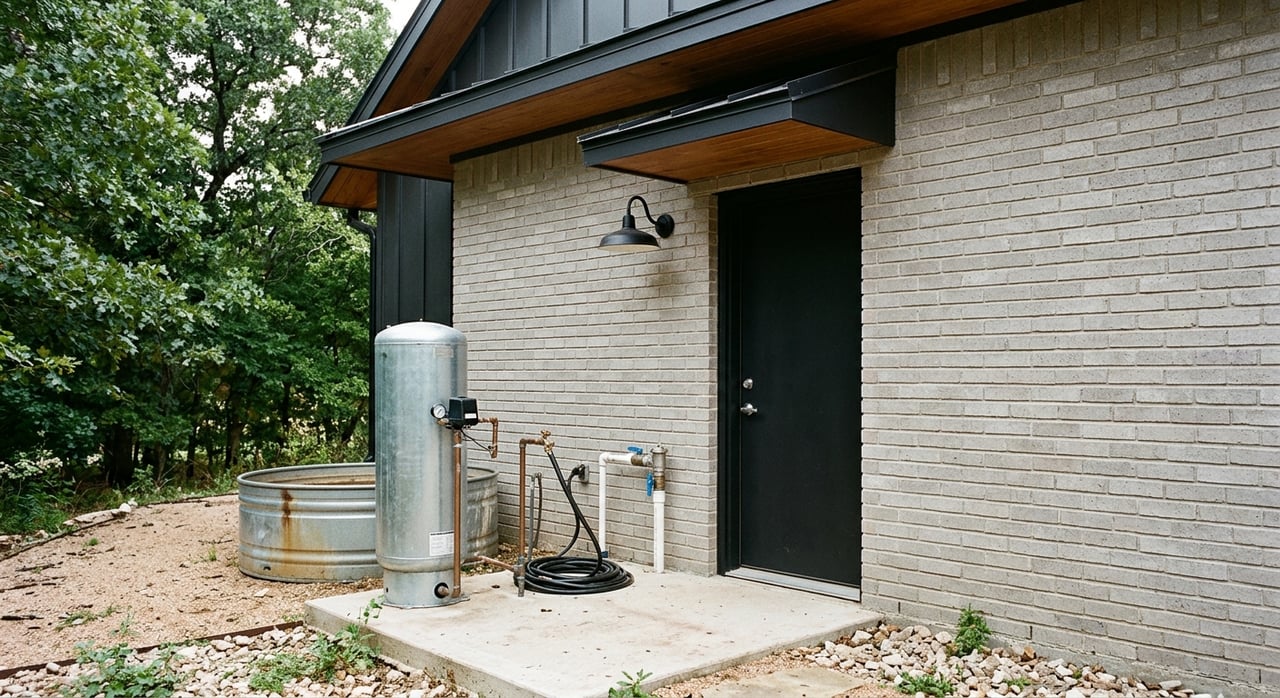
If the property relies on a private well, you are responsible for water quality. Texas advises private well owners to use an accredited drinking-water laboratory for testing, which is very different from a public water system that must test regularly and issue an annual Consumer Confidence Report.
Local rules matter too. In Irion County, all wells must be registered, and new wells must meet state spacing and location requirements under district rules.
That is why a future well site should be treated as part of the ranch layout, not something to figure out after the sale is done. A well location, pipeline route, and watering point plan can affect where you place fences, pens, roads, and grazing areas.
Think beyond one water source
For ranch use, off-stream watering systems can offer more flexibility than relying only on a creek or pond. Texas A&M AgriLife describes these systems as permanent or portable off-stream supplies that can improve animal distribution.
AgriLife also notes that one properly placed well may supply several watering points. Depending on the property, rainwater harvesting, windmills, and solar pumps may also play a role in the overall plan.
For a first-time buyer, the key lesson is simple. Do not ask only, “Is there water?” Ask, “How will this property have dependable water in a dry year?”
Grazing potential is more than acreage
A common first-time mistake is assuming more acres automatically means more livestock. In reality, stocking rate depends on rainfall, forage production, range condition, and the forage needs and preferences of the animals.
Texas A&M AgriLife says stocking rate is the most important grazing decision. Its drought guidance also emphasizes a conservative, flexible approach before, during, and after drought.
That matters in this part of Texas. Local AgriLife work at the Sonora station on the Edwards Plateau has long focused on stocking-rate and multi-species grazing studies on native rangeland, which shows how important local conditions are to ranch planning.
Questions to ask about the range
When you walk a property, try to understand how the land performs, not just how it looks on showing day. Ask practical questions like:
- What does forage production look like in a dry year?
- What has the recent grazing pressure been?
- How is the range condition across different parts of the tract?
- Will your intended use require rest, brush work, or water improvements first?
A ranch may still be a great fit even if it needs work. You just want to budget for that reality upfront.
Improvement costs add up fast
For many first-time ranch buyers, the purchase price is only part of the story. The first wave of capital work often includes access fixes, water development, fencing, and brush management.
Texas NRCS payment schedules are planning baselines, not contractor bids, but they can help you build a realistic early budget. Current Texas benchmark figures include about $1.80 per foot for permanent electric cross-fence, about $2.55 per foot for four-strand barbed-wire cross-fence on normal soils, and about $3.11 per foot on steep or rocky soils.
For water infrastructure, common plastic or HDPE pipeline scenarios run roughly $2.45 to $5.62 per foot, while steel pipe is about $9.91 per foot. Rural water connection equipment is listed at about $4,398.
Well costs also vary by depth. Texas benchmarks show about $4,246 for wells 150 feet deep or less, about $8,478 for 150 to 300 feet, about $13,521 for 300 to 600 feet, and about $32,488 for deeper wells.
Brush work can be another major line item. Texas EQIP benchmarks list brush and tree removal at about $837 per acre for smaller material and about $1,702 per acre for brush and trees 6 inches or greater.
Use cost baselines the right way
These numbers are helpful for planning, but they are not quotes. Material and labor costs are re-evaluated each year, so your actual project cost may differ.
Still, the bigger lesson is valuable for first-time buyers. A ranch purchase is usually not only about buying the tract. It is also about funding the work needed to make the land function the way you want.
If you may subdivide later, check county rules now
Some buyers want a ranch they can keep whole. Others want flexibility to divide part of it later for family, resale, or long-term planning.
If that possibility is on your radar, review Irion County subdivision rules early. The county requires a 50-foot right-of-way for roads and flag-lot access roads, and plats using groundwater must include a groundwater-availability certification.
That kind of detail can affect how you view a property from day one. A tract that works fine as a single parcel may need a different access and water plan if future division is part of your goals.
A simple due diligence checklist
Before you close on a first ranch in Irion County, you should be able to answer five plain-language questions with confidence.
- Is the access legal and recorded?
- Where will the water come from in a dry year?
- Is the well site workable under local district rules?
- How much forage does the land really produce in drought conditions?
- What will the first round of improvements cost?
If any answer is uncertain, it is usually better to slow down and get the missing document, test, or quote before the deal is finished. That extra step can protect both your budget and your long-term plans for the property.
Why local guidance matters
First-time ranch buying is different from buying a house in town. You are not just evaluating a structure and a price. You are weighing access rights, water planning, land use, and improvement costs that can change the real value of the deal.
That is where practical local knowledge can make the process less stressful. When you understand the ranch and the work it may need, you can make a decision with more confidence and fewer surprises.
If you are looking at ranch land in Irion County and want a steady, local perspective on what to check before you buy, reach out to Roy Zesch. Roy brings practical rural market knowledge and responsive guidance to help you move forward with clarity.
FAQs
What should first-time ranch buyers in Irion County check before closing?
- You should confirm legal access, review water sources, understand local well rules, evaluate grazing potential in dry conditions, and estimate the first round of improvement costs.
How important is water for an Irion County ranch purchase?
- Water is one of the most important factors because availability can vary by tract, private wells require owner responsibility for water quality, and local well registration and spacing rules can affect how the property functions.
Do Irion County ranches always have legal road access?
- No. A visible road or track is not the same as legal access, so you should review the survey, deed, and any recorded easements to confirm how the property is legally reached.
How should first-time buyers estimate ranch improvement costs in Irion County?
- A good starting point is to budget for likely early projects such as fencing, water lines, wells, brush work, and any access improvements, using Texas benchmark figures as planning baselines rather than fixed bids.
What if I want to subdivide ranch land in Irion County later?
- You should review county subdivision rules early because road and flag-lot access roads require a 50-foot right-of-way, and plats using groundwater must include a groundwater-availability certification.