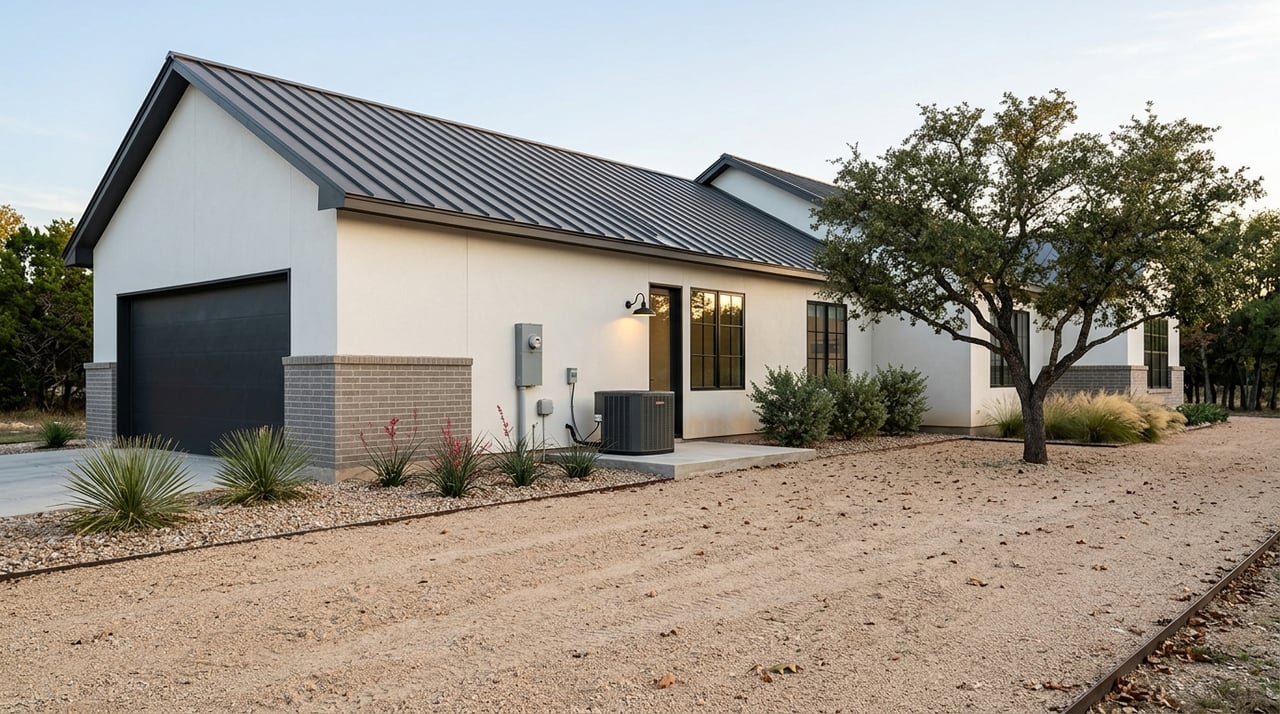
Thinking about building a home on acreage near Wall? It can be an exciting move, but it is also very different from buying a typical resale home in town. Near Wall, the lot, water source, septic plan, road access, and deed restrictions can shape your project just as much as the house design. If you want to avoid expensive surprises, it helps to know what to check before you buy. Let’s dive in.
Why building near Wall is different
Wall is an unincorporated community in Tom Green County, about ten miles southeast of San Angelo. That matters because many acreage purchases here are shaped more by county rules, recorded restrictions, and rural utility setups than by city-style infrastructure.
In simple terms, buying new construction on acreage near Wall is often more like managing a small land-development project than buying a finished house. You are not just choosing a floor plan. You are also evaluating whether the land can support the home, septic system, driveway, and water access you need.
New-build inventory is limited
If you are hoping to buy a completed new-construction home in Wall, your choices may be slim. Realtor.com currently shows only one active new-construction home in Wall, while nearby San Angelo-area new builds include smaller lots ranging from about 7,841 square feet to 1.17 acres.
That thin inventory is one reason many buyers look at lots and build options instead. In the Wall area, the market often leans toward small-acreage opportunities outside a typical in-town subdivision pattern.
Acreage lots may look simple, but details matter
A current example in the area is Windsor Estates, which markets 112 lots across more than 139 acres with lot sizes from 1 to 1.38 acres and starting prices around $61,650. That sounds straightforward on the surface, but developments like this show why buyers need to read both the marketing materials and the recorded restrictions.
A listing in that area shows a common rural setup: about 1.07 acres with well water, septic tank, and electricity available. That is very different from assuming a parcel has city water, city sewer, and public road maintenance.
Lot size rules can affect your options
Tom Green County subdivision regulations set minimum lot sizes based on water availability. The minimum is one-half acre when a public water supply exists and one acre when it does not.
That rule gives you an early clue about how the property may function. If public water is not available, the lot may need more space to support the home and the utility setup, especially if septic is involved.
Utilities should be confirmed early
One of the biggest mistakes buyers make is assuming utilities are already handled because a property is being marketed as build-ready. In rural areas near Wall, utility service needs to be verified carefully and specifically.
County rules require subdivision contracts to explain how water, sewer, electricity, and gas will be made available. That tells you something important: utility access is not a side issue here. It is central to whether the property works for your plans.
Water service is not always what it seems
Water can come from different sources on acreage near Wall. Some parcels may depend on a private well, while others may fall within a rural water service area.
Windsor Estates is a good example of why you should verify the exact setup. Its community website says Millersview-Doole water will serve each lot and that the shared well is included in the lot price, while the recorded covenants describe one water well shared between lots under a Water Well Plan. That does not mean the project is unsuitable, but it does mean you should confirm the water source in writing before moving forward.
If the parcel depends on a private well, the Lipan-Kickapoo Water Conservation District is the local groundwater district based in Wall. Its drilling permit form says wells must be at least 330 feet from another well and 50 feet from the property line. The district also offers water sampling, including one free water test per well for district residents.
If the parcel is expected to have rural water service instead, Millersview-Doole Water Supply Corporation serves rural farm and domestic customers across four counties. Confirming the current service area is a smart part of due diligence before you commit.
Septic is often part of the build
Many acreage properties near Wall are not connected to city sewer. That means septic is often part of the project budget and site plan.
Tom Green County’s Environmental Health office enforces OSSF and septic rules, reviews lot sizes and locations for septic and floodplain issues, and regulates development in mapped floodplains. In practice, that means the lot has to work for the house and the septic system together.
A pretty lot is not enough by itself. You also need enough usable area for septic placement, drainage, and any required finished-floor elevation.
Roads can become a long-term cost
Private roads are one of the most overlooked parts of buying acreage. Tom Green County states that platted lot owners remain responsible for roads unless the County later accepts them for maintenance.
That can affect your costs and expectations long after closing. In some private subdivisions, the rules may require mandatory HOA membership, road-maintenance schedules, and fire-access provisions.
If a road is private, ask direct questions about:
- Who maintains it
- How maintenance costs are shared
- Whether there is an HOA
- Whether the County has accepted any portion for maintenance
- How emergency access is handled
These are not small details. They can affect your monthly budget, future resale, and day-to-day convenience.
Fire access also matters
In rural developments without hydrants served by a TCEQ-certified centralized water system, county rules require limited fire-suppression storage. That may not be the first thing you think about when shopping for land, but it is part of how rural subdivisions are planned and approved.
This is another reason to treat acreage purchases differently from standard in-town home shopping. Safety infrastructure can be handled in ways that are not obvious from a listing photo or brochure.
Builder rules may be stricter than county rules
A major due-diligence point near Wall is understanding that subdivision restrictions can go beyond county requirements. County approval does not automatically mean you can build whatever you want on a lot.
In Windsor Estates, the recorded covenants require prior written ARC approval for plans, approved homebuilders, and compliance with design controls. The same covenants also require lot-by-lot architectural review and state that county permitting does not replace ARC approval, and ARC approval does not automatically satisfy county requirements.
That means you may need approval from more than one decision-maker before construction begins.
Design standards can affect your budget
Recorded covenants can also shape the final cost of your build. In Windsor Estates, the rules include a 2,200-square-foot minimum for single-family lots, two-car attached garages, exterior-material standards, double-paned windows, concrete driveways, and landscaping deadlines.
Those standards may fit your goals, but they can raise your total budget compared with a more flexible build site. Before you buy a lot, make sure the restrictions match the type of home you actually want to build.
Financing works differently for acreage builds
Financing new construction on acreage is usually more complex than financing a resale home. A resale purchase often uses a standard mortgage on an existing house. A new build on acreage may involve lot acquisition, site work, construction draws, and a later conversion into a permanent mortgage.
USDA single-close construction materials show that the construction budget can include land acquisition, well and septic installation, roads and driveways, landscaping, permits, surveys, and contingency reserves. The program can also fund payments during construction for up to 12 months.
Fannie Mae says construction-to-permanent financing can be structured as either one closing or two closings. In a single-close transaction, the lender manages disbursements during construction, and the construction phase generally cannot exceed 12 months for any single period or 18 months total. Longer schedules typically require a two-closing structure.
Ask your lender early
Not every lender handles acreage construction the same way. Before you choose a lot or builder, ask whether the lender can finance:
- The land purchase
- Site preparation
- Well installation, if needed
- Septic installation
- Driveway or road work
- Construction draws
- Conversion to the permanent mortgage
Getting those answers early can help you avoid picking a property that does not fit your financing path.
A smart checklist before you buy
If you are comparing acreage lots near Wall, focus on the practical pieces first. The floor plan matters, but the site has to support it.
Here are the most important items to verify:
- Exact water source
- Septic feasibility
- Floodplain or drainage concerns
- Road maintenance responsibility
- Fire access requirements
- Deed restrictions and HOA dues
- Builder approval requirements
- Whether your lender can finance the lot, site work, and home together
This kind of review can save you time, money, and stress later in the process.
Build or buy: which makes more sense?
If you find a completed new-construction home that already has utilities, access, and approvals in place, buying may be the simpler path. That can reduce the number of moving parts and shorten the timeline.
If inventory stays limited, building may give you more flexibility on layout, finishes, and land use. Just remember that near Wall, building on acreage usually means coordinating the house plan with utility setup, site conditions, restrictions, and financing from day one.
The right choice depends on how much customization you want, how comfortable you are with a longer timeline, and how carefully the property has already been prepared for construction.
If you are weighing acreage near Wall, it helps to work with someone who understands both homes and rural property details. Roy Zesch can help you compare lots, spot potential red flags, and move forward with a clear plan that fits your goals.
FAQs
What should you verify before buying acreage near Wall for new construction?
- Confirm the water source, septic feasibility, road maintenance responsibility, fire access, deed restrictions, HOA dues, builder approval rules, and financing options for the lot and build.
How is building on acreage near Wall different from buying a resale home?
- Building on acreage often involves evaluating land, utilities, septic, roads, and financing structure in addition to choosing the house itself.
What are common utility setups for Wall-area acreage lots?
- Many properties use a rural pattern such as well water or rural water service, septic systems, and electricity availability rather than full city-style utility service.
Do Tom Green County lot-size rules matter for Wall-area new construction?
- Yes. County subdivision regulations set a minimum of one-half acre when public water is available and one acre when it is not.
Can subdivision restrictions near Wall affect your home design?
- Yes. Recorded covenants may require architectural approval, approved builders, minimum square footage, garage standards, driveway requirements, and other design rules.
What financing questions should you ask for new construction on acreage near Wall?
- Ask whether the lender can finance the land, site work, well or rural water setup, septic, driveway work, construction draws, and conversion to the permanent mortgage.